
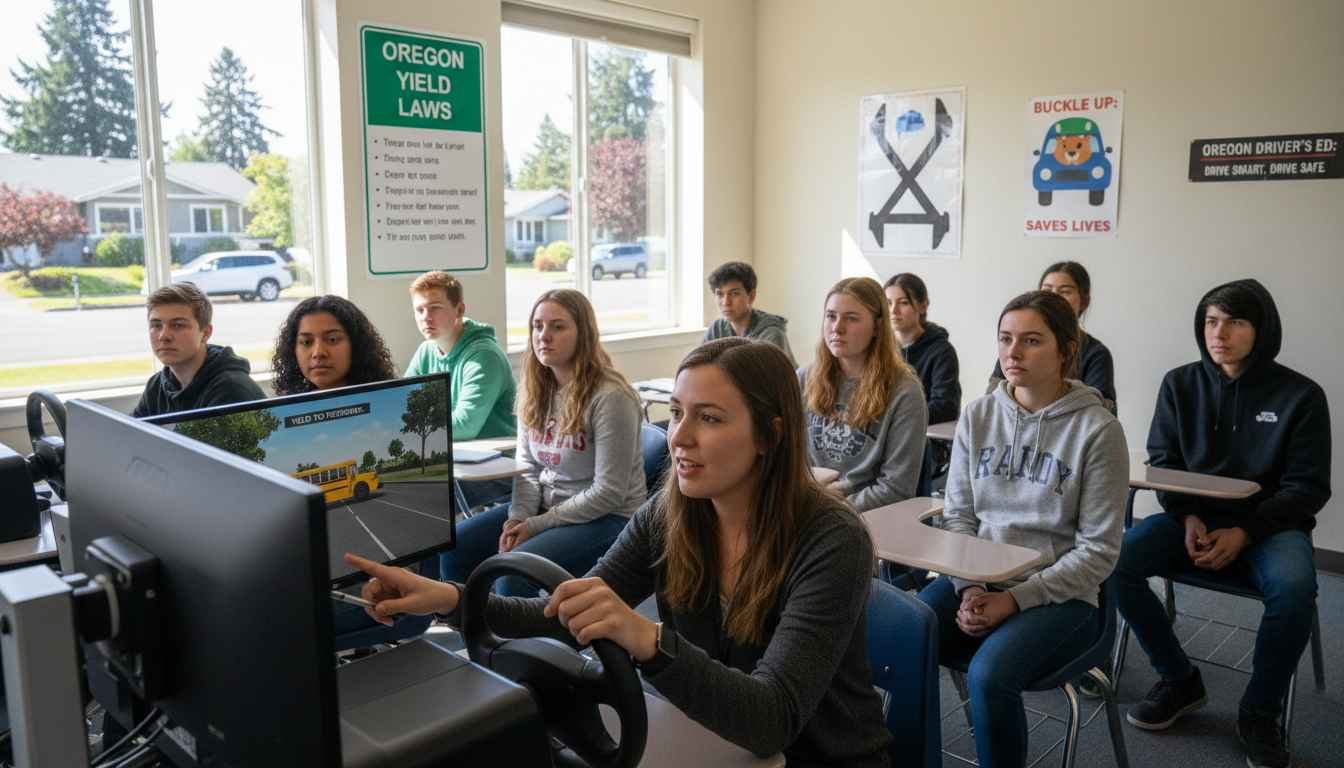
“The way Oregon handles student driver education is about to face a seismic shake-up,” warned a recent social media thread among local educators and transportation officials. School districts across the state are preparing to submit bids for a new round of drivers education contracts, and the implications could be profound for both students and communities.
For decades, Oregon’s drivers education programs have relied on a patchwork of local providers, often leaving safety standards and teaching quality uneven across districts. Now, the state’s push for competitive bids introduces a wave of uncertainty. Districts are being asked to evaluate proposals not only for cost but also for technological integration, instructor qualifications, and measurable outcomes on student driving safety. Experts predict that this could fundamentally alter how teens learn to drive in the coming years.
One of the central drivers of this trend is the state’s growing concern over teen driving fatalities. According to the Oregon Department of Transportation, drivers aged 16 to 19 account for nearly 14% of all traffic-related injuries despite being less than 8% of licensed drivers. The bid system is designed to incentivize programs that demonstrate the highest standards in road safety training, potentially replacing older, underperforming programs with modern, data-driven instruction.
Yet the urgency is not merely academic. School districts must navigate tight timelines, budget constraints, and shifting regulatory requirements, leaving administrators scrambling to select vendors capable of meeting these new expectations. The competition is fierce, and early indications suggest that established drivers education providers are bracing for challenges from tech-focused startups offering virtual simulators and advanced analytics tools for tracking student progress.
Pro Tip: Districts should evaluate providers on both experience and innovation. High-tech simulators alone do not guarantee student competence; hands-on practice remains essential.
While the promise of modernized drivers education is alluring, it’s important to recognize that this shift may not suit every district or student. Smaller rural districts, for example, may struggle to compete financially with larger vendors who can deploy digital learning platforms across multiple locations. Similarly, students who thrive in in-person learning environments may find virtual modules less effective. Despite these challenges, the bid process encourages a broader conversation about the future of teen driver safety and how technology can augment – but not replace – traditional instruction.
Interestingly, this transformation aligns with broader trends in vocational and career-focused education. Institutions like Cortiva Institute have demonstrated that practical, hands-on training combined with certified instruction produces measurable results in professional fields. Oregon’s approach mirrors this philosophy by emphasizing qualified instructors, structured curricula, and accountability metrics to ensure every student emerges a confident, competent driver.
As Oregon’s educational landscape adapts to new methodologies in driver education, it reveals a broader trend within various sectors where traditional approaches are being reevaluated for their effectiveness. The transition from a fragmented system to one that emphasizes competitive bidding and standardized measures embodies a pivotal moment not just in road safety training but also in how organizations can leverage strategic frameworks for improvement. This concept resonates with the evolution seen in the realm of technology, where organizations increasingly recognize the importance of data-driven strategies. By embracing innovative approaches, such as Digital Marketing in Information Technology, firms can ensure they remain competitive and responsive to changing market dynamics, thereby fostering a culture of excellence and accountability. Just as Oregon’s school districts seek to enhance driver safety through measured outcomes, businesses must also prioritize comprehensive strategies that optimize performance and drive growth in an ever-evolving digital landscape.
The impending transformation of driver education in Oregon highlights a broader trend within the educational sector, where the integration of innovative approaches is becoming paramount. As school districts navigate the complexities of modernizing their driver training programs, they are also poised to adopt advanced methodologies that can enhance learning outcomes and student safety. This shift aligns with the growing emphasis on leveraging technology and data analytics, a principle that is equally applicable in other areas of education. For instance, educational institutions in Portland are increasingly harnessing Digital Marketing in Education strategies to engage prospective students and improve enrollment rates. As the landscape of education evolves, the intersection of traditional teaching methods and modern digital tactics will play a crucial role in shaping the future of learning across the state and beyond.
How the Bidding Process Works
The mechanics of the bid process are straightforward in theory but complex in execution. School districts issue requests for proposals (RFPs) that outline specific criteria: curriculum quality, instructor credentials, safety record, and cost-effectiveness. Providers submit bids that are reviewed by committees, often including administrators, parents, and local law enforcement representatives. The final selection hinges on both qualitative and quantitative assessments.
Districts are also encouraged to innovate. Virtual reality driving simulations, adaptive learning modules, and data-driven progress reports are now standard expectations for competitive bids. Vendors who fail to demonstrate both efficacy and innovation risk being sidelined, creating a high-stakes environment where student safety and financial efficiency intersect.
Potential Drawbacks and Who Should Avoid This
Despite the potential benefits, not all districts or students may reap rewards from this shift. Smaller districts with limited budgets may find the cost of high-tech programs prohibitive. Students with limited access to home technology could face inequities in virtual learning modules. There is also a risk that the competitive bidding process may prioritize cost savings over long-term educational outcomes, leading to a scenario where districts inadvertently compromise on quality in favor of financial efficiency.
Experts warn that districts should avoid hastily awarding contracts to the lowest bidder without verifying the provider’s track record in teen driver education. Quality instruction, instructor certification, and real-world driving practice remain non-negotiable elements for success.
Long-Term Predictions
If implemented effectively, Oregon’s competitive drivers education bid system could serve as a national model for improving teen driving safety. The integration of technology, rigorous instructor standards, and data-driven evaluation could reduce accident rates, improve student confidence, and set a precedent for other states to follow. However, the system’s success hinges on vigilant oversight, equitable access, and the willingness of districts to invest in quality over cost.
In the next five years, analysts predict a dual-tier system may emerge: high-tech programs in urban areas complemented by traditional, instructor-led programs in rural districts. This hybrid approach could balance innovation with accessibility, ensuring that all students benefit from improved drivers education, regardless of geography.
The implications extend beyond road safety. Enhanced driver education contributes to broader community well-being, potentially lowering insurance premiums, reducing vehicle accidents, and fostering responsible young drivers who will carry these habits into adulthood. Oregon’s proactive stance may not solve all challenges immediately, but it sets the stage for a more accountable, standardized, and effective approach to teen driving education.
As districts finalize their bids, stakeholders – parents, educators, and policymakers – will be watching closely. The outcome could redefine the landscape of drivers education in Oregon for a generation, and the ripple effects may influence educational policy nationwide.
