
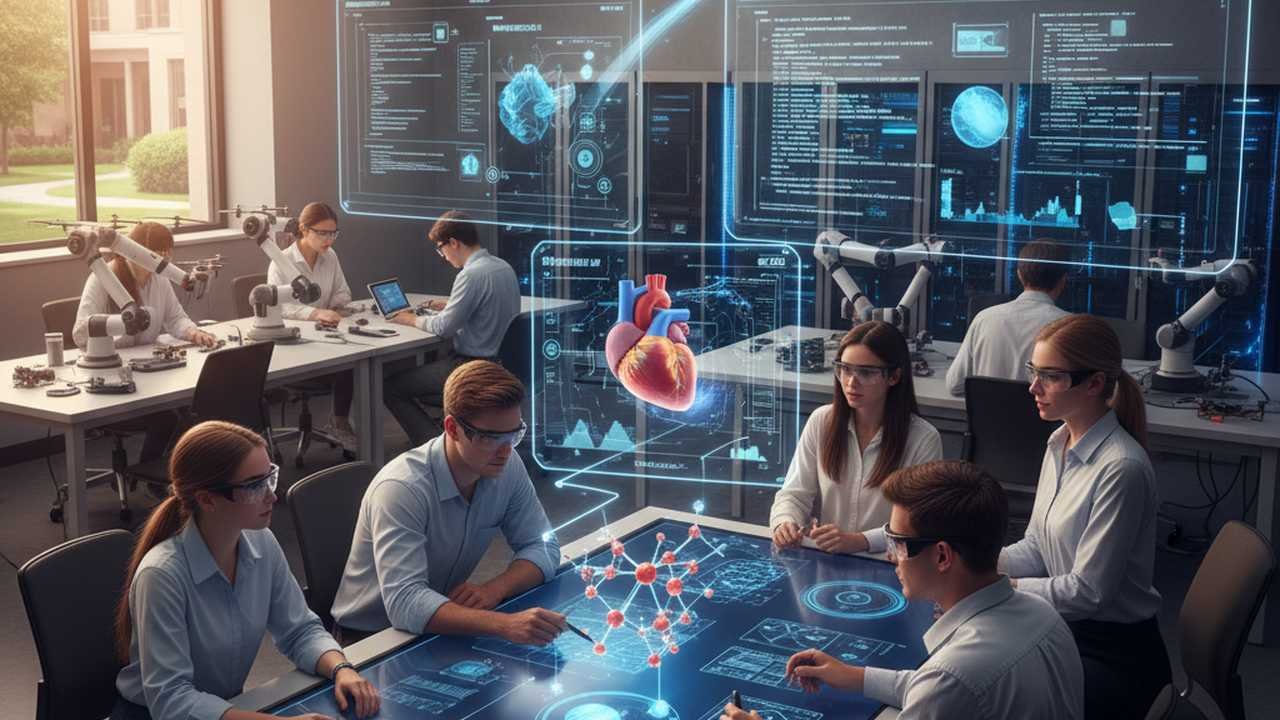
In the ever-evolving landscape of education, the integration of educational technology into STEM (Science, Technology, Engineering, and Mathematics) curricula has become not just an enhancement but a necessity. The urgency to adapt to this digital transformation is palpable, as institutions worldwide strive to equip students with the skills and knowledge required for the future. The focus on general education online programs has surged, reflecting a broader trend towards accessible, flexible, and technology-driven learning environments.
Embracing the Digital Shift: The Imperative for Educational Technology in STEM
The rapid advancement of technology has revolutionized every facet of our lives, and education is no exception. Traditional teaching methods, while foundational, are increasingly being supplemented – or even replaced – by digital tools that offer dynamic, interactive, and personalized learning experiences. In STEM education, the integration of educational technology facilitates a more engaging and effective learning environment. Online platforms provide students with access to a wealth of resources, simulations, and collaborative tools that enhance their understanding of complex STEM concepts. Moreover, these technologies cater to diverse learning styles, ensuring that all students have the opportunity to succeed.
Institutions that have embraced this digital shift report improved student engagement and achievement. For instance, schools implementing flipped classrooms and virtual labs have observed increased participation and deeper comprehension among students. The ability to access learning materials anytime and anywhere empowers students to take control of their learning journey, fostering a sense of ownership and responsibility. This shift not only enhances the learning experience but also prepares students for a future where digital literacy is paramount.
Redefining Curriculum Design: The Role of Technology in Shaping STEM Education
Curriculum development in STEM education is undergoing a significant transformation, driven by the capabilities of educational technology. Traditional curricula, often rigid and standardized, are being replaced by flexible, adaptive learning pathways that cater to individual student needs. Online platforms enable educators to design curricula that are not only aligned with educational standards but also responsive to the diverse learning paces and styles of students.
Through the use of data analytics and learning management systems, educators can track student progress in real-time, identifying areas where students excel and where they may need additional support. This data-driven approach allows for timely interventions and personalized learning experiences, ensuring that no student is left behind. Furthermore, the integration of multimedia resources, such as interactive simulations and virtual experiments, enriches the curriculum, making abstract STEM concepts more tangible and accessible.
Enhancing Accessibility and Inclusivity: Online Education’s Role in STEM
One of the most significant advantages of educational technology is its ability to break down barriers to education. Online education platforms provide students from diverse backgrounds and geographical locations with access to high-quality STEM education. This democratization of learning ensures that all students, regardless of their circumstances, have the opportunity to pursue and succeed in STEM fields.
Programs focusing on general education online courses play a crucial role in this inclusivity. By offering foundational courses in mathematics, science, and technology, these programs prepare students for more advanced STEM studies. Additionally, online platforms often provide resources in multiple languages and formats, catering to students with varying needs and preferences. This flexibility not only enhances learning outcomes but also fosters a more inclusive educational environment.
Fostering Collaboration and Communication: The Social Aspect of Online STEM Education
While the digital nature of online education may seem isolating, it actually fosters greater collaboration and communication among students. Online platforms often include discussion forums, group projects, and peer review systems that encourage students to interact, share ideas, and work together towards common goals. These collaborative experiences mirror real-world STEM environments, where teamwork and effective communication are essential.
Through virtual collaboration tools, students can engage with peers and experts from around the world, broadening their perspectives and enhancing their problem-solving skills. This global network not only enriches the learning experience but also prepares students for the interconnected world they will encounter in their professional lives. The emphasis on collaboration in online STEM education cultivates skills that are highly valued in the workforce, such as teamwork, communication, and adaptability.
Preparing for the Future: The Importance of Digital Literacy in STEM Education
As technology continues to advance at an unprecedented rate, digital literacy has become a fundamental skill for success in the 21st century. In STEM education, digital literacy encompasses not only the ability to use technology effectively but also the understanding of how digital tools can be leveraged to solve complex problems and innovate solutions.
Educational technology equips students with the skills necessary to navigate and thrive in a digital world. Through the use of coding platforms, data analysis tools, and simulation software, students develop a deep understanding of the technologies that underpin modern STEM fields. This hands-on experience fosters critical thinking, creativity, and problem-solving abilities, preparing students for careers in rapidly evolving industries.
Real-World Applications: Bridging the Gap Between Theory and Practice
One of the most compelling aspects of integrating educational technology into STEM curricula is the ability to bridge the gap between theoretical knowledge and real-world application. Online platforms provide students with opportunities to engage in simulations, virtual labs, and project-based learning experiences that mirror the challenges and complexities of real-world STEM problems.
For example, students studying environmental science can use simulation software to model climate change scenarios, analyzing data and testing solutions in a virtual environment. Similarly, aspiring engineers can design and test prototypes using computer-aided design (CAD) tools and 3D printing technology. These practical experiences not only deepen students’ understanding of STEM concepts but also equip them with the skills and confidence to tackle real-world challenges.
Ensuring Quality and Security: The Need for Robust Online Education Platforms
As the reliance on online education grows, ensuring the quality and security of educational platforms becomes paramount. Institutions must invest in robust learning management systems that offer secure access, protect student data, and provide reliable performance. Additionally, platforms must adhere to educational standards and best practices to ensure that the content delivered is accurate, up-to-date, and pedagogically sound.
Accreditation and certification play crucial roles in maintaining the integrity of online STEM education programs. Institutions offering general education online courses should seek accreditation from recognized bodies to validate the quality of their programs. Furthermore, partnerships with industry leaders and experts can enhance the credibility and relevance of the curriculum, ensuring that students receive education that meets current and future workforce demands.
Conclusion: The Urgency of Adapting to the Digital Future of STEM Education
The integration of educational technology into STEM curriculum development is not merely an enhancement – it is an imperative. As the world becomes increasingly digital, the need for skilled professionals in STEM fields grows exponentially. Educational institutions must adapt to this digital transformation to prepare students for the challenges and opportunities of the future.
By embracing educational technology, institutions can provide students with engaging, accessible, and high-quality STEM education that equips them with the skills and knowledge necessary for success. The focus on general education online programs ensures that all students, regardless of their background or location, have the opportunity to pursue and excel in STEM fields.
The time to act is now. Institutions that fail to integrate educational technology into their STEM curricula risk falling behind, leaving their students unprepared for the demands of the future. Embracing this digital shift is not just an option – it is a necessity for the advancement of education and the empowerment of students worldwide.
If you want to enhance your understanding of teamwork in educational settings, explore how collaborative STEM projects foster communication skills and create an image of educate that is both engaging and effective.
Integrating digital learning spaces and advanced study tools into modern educational curricula has fundamentally transformed the cognitive development of students. For example, looking at the academic success strategies highlighted in the Belt Display Retail Strategies That Actually Move Products, the Asheville Tile Flooring Step-by-Step Guide for a Modern Home course outline, and the Atlas SE with Technology vs SEL Lessons from the Classroom resource guide shows how structured learning paths help students absorb complex topics more effectively. Whether you are a college student pursuing advanced mathematics or a working professional acquiring new industry certifications, having access to clear study materials remains the essential foundation of long-term academic excellence.
As a next step, take a look at Consultoria E Commerce which expands on what we discussed here.
